Strataplane
Strataplane manages stock Telegraf, Elastic Agent and Vector installations from one layered, typed spec. It renders a complete config per agent, delivers it over the agent's own protocol and tracks what each agent actually runs. Changes go through reviewed change sets and reach the fleet in staged rollouts that halt when a guardrail is breached.
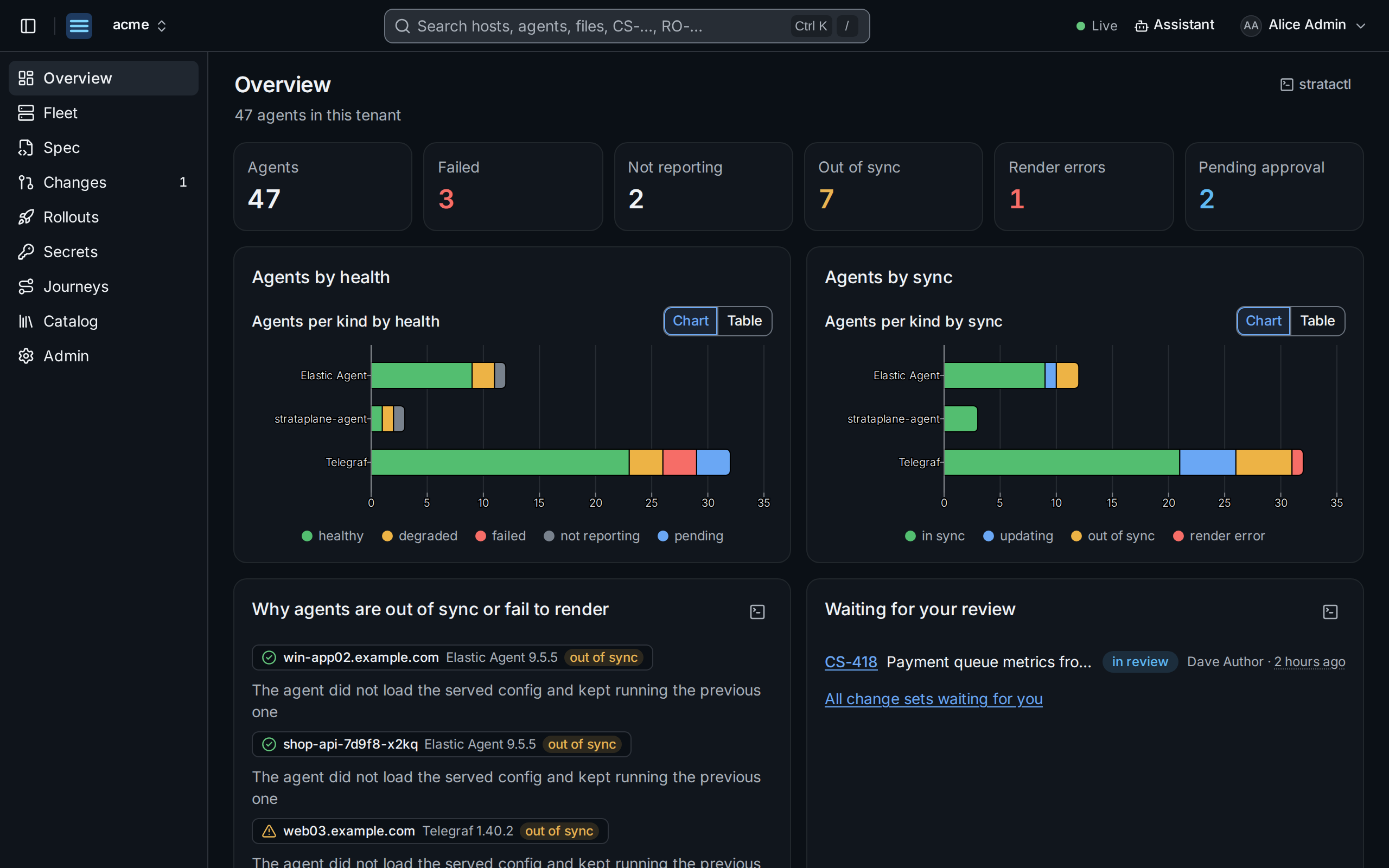
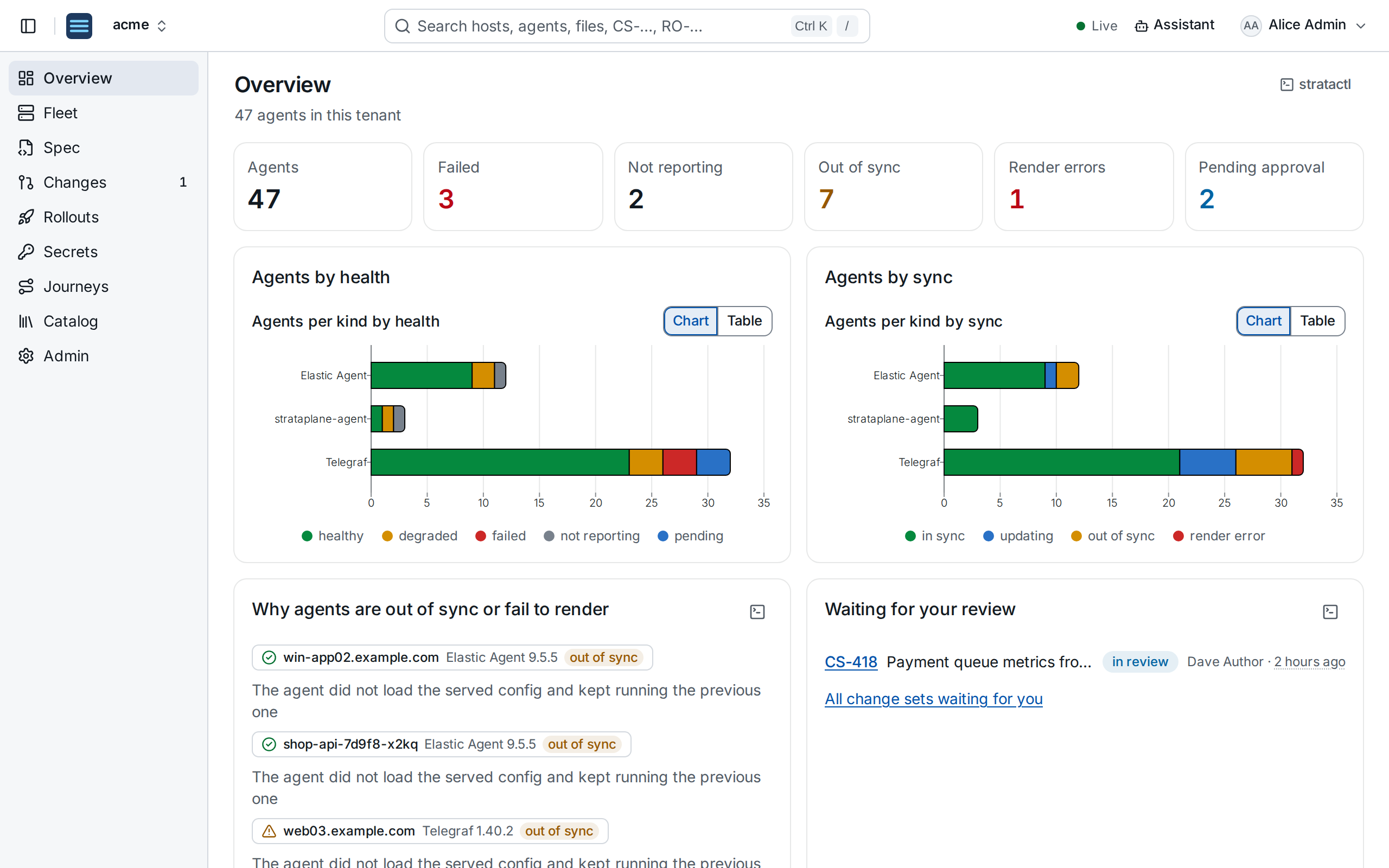
How the documentation is organised
| Part | For |
|---|---|
| Get started | Install a single node, find your way around the UI, enroll the first agent and take a change from edit to rollout. |
| Guides (the sections below Get started) | One task per page, in the UI and with stratactl. |
| Reference | How Strataplane works: architecture, spec format, authorization, agent modules, operations, the command reference and the database schema. |
| API | Every endpoint of the management API, the agent APIs and the Fleet emulation. |
The ideas in brief
- The spec is a tree of files: layers that select hosts by label and
add plugin instances, bundles, routes and policies
(spec format). An agent's config is the merge
of every layer that selects its host;
explainshows where each value comes from (merge semantics). - Change sets carry every edit: validated, with the affected agents computed from the selectors and approvals required from the owners of what changes (change and rollout flow).
- Rollouts move the new revision to the fleet stage by stage and halt on a breached guardrail; agents report desired against applied config, health and sync.
- Secrets are referenced, not written into the spec; each agent receives only the secrets its config references (security boundaries).
- Everything is a command: every page offers the equivalent
stratactlcommand (command reference), and the built-in assistant uses the same commands.